Operating hours
When you use power
Daytime lighting, cooling and equipment use help shape the assessment. Tell us about weekends, seasonal demand and evening operations.
Put your roof to work
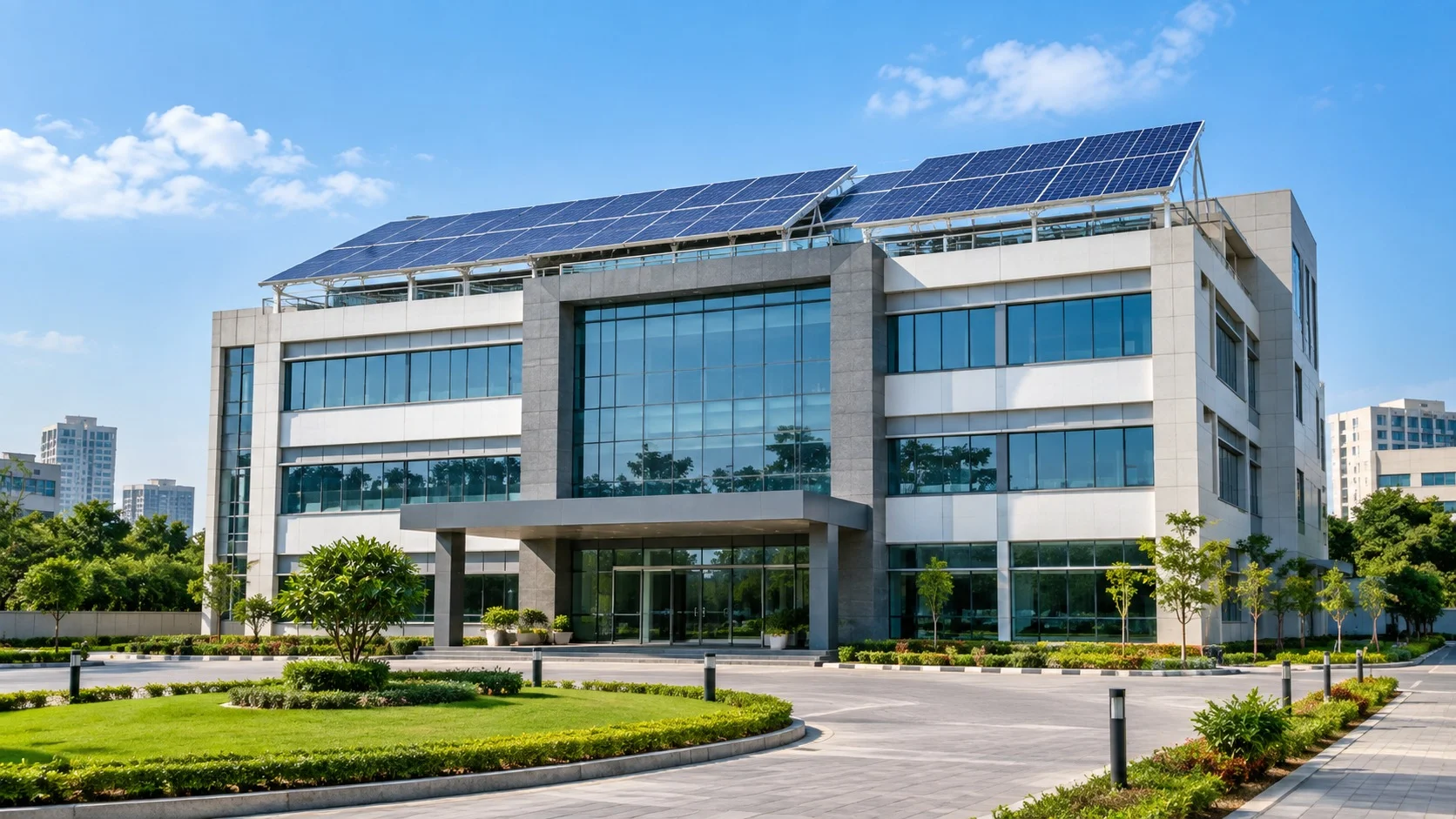
Plan commercial solar installation around the way your business uses electricity. SolarSky provides primarily on-grid solutions for shops, offices, schools, hospitals and hotels.
Agra · Mainpuri · Firozabad · Etah
500+installations across SolarSky’s overall service region
4 districtsbusinesses in cities, towns and villages served
Free site surveystart with your property and electricity use
A business decision, grounded in your site
Using solar electricity as it is generated can reduce electricity bought from the grid. The right design starts with how much power you use—and when.
Operating hours
Daytime lighting, cooling and equipment use help shape the assessment. Tell us about weekends, seasonal demand and evening operations.
Property suitability
Available roof or ground space, shading, safe access and permission to install all matter. A large roof alone does not determine system size.
Your quotation
Compare the equipment, installation scope, expected generation assumptions and ongoing care, alongside the quoted price.
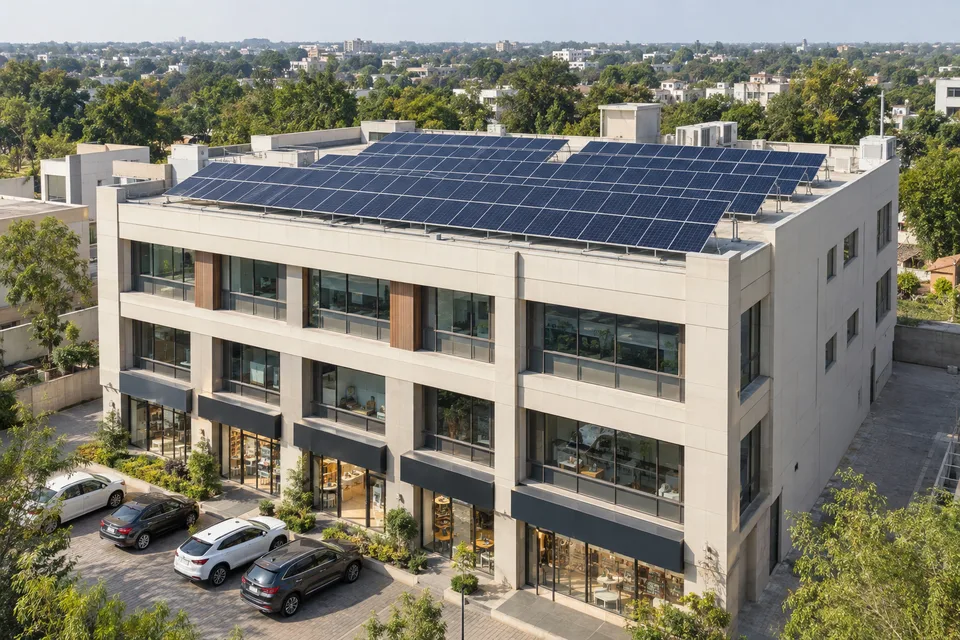 Shops and offices
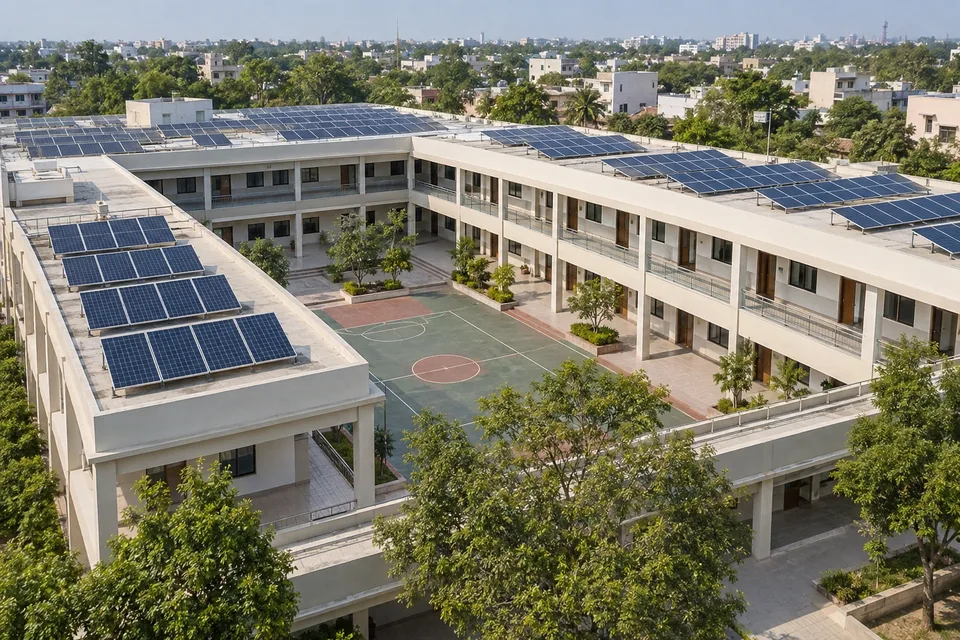 Schools and colleges
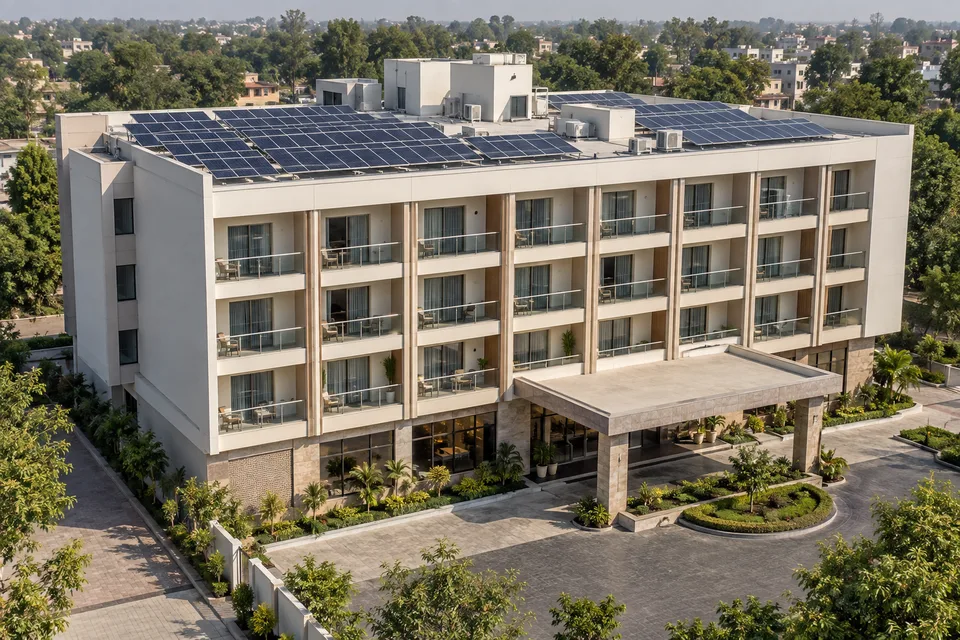 Hotels and hospitals
On-grid, with a clear purpose
On-grid solar works alongside your electricity connection. It is SolarSky’s main approach for commercial projects, with rooftop or ground-mounted layouts assessed for the property.
Panels generate DC electricity; a solar inverter converts it to AC for the building. Power used while solar is generating reduces grid imports. When generation is lower than demand, the grid supplies the difference.
Surplus electricity needs an agreed arrangement. Ask whether export is permitted and how it would be metered or credited for your connection. Net metering should be confirmed with the electricity provider, not assumed from a generic savings estimate.
A standard on-grid installation does not keep equipment running through a power cut. Critical loads, existing generators and any backup requirement need a separate discussion.
Discuss your business requirementsBefore you commit
The price, installation timeline and workmanship warranty depend on your site quotation. An itemised quote makes it easier to see what you are paying for: equipment, mounting, electrical work and taxes, along with the payment stages. Warranty providers, duration and exclusions also need to be clear before you agree.
Two proposals are easier to compare when they show system capacity, expected annual generation, how much solar electricity your business would use during the day, and what happens to any surplus. Savings estimates also depend on your usage and tariff, including any fixed or demand charges that remain. Before installation, agree on approval responsibilities, site access and any planned shutdown.
Review the solar panels and inverters proposed for your site. Equipment models, availability and warranty terms are confirmed in the quotation.
Request a Business AssessmentHandover and solar maintenance
SolarSky offers AMC, preventive maintenance, cleaning and repairs. Agree on the service scope and charges in your quotation, including who to contact if generation drops or an inverter shows a fault.
Before you decide
Talk through your site with our team.
Agra office & directionsStart with recent electricity bills and your daytime usage, then check usable space, shading, roof condition and connection requirements. Two businesses with similar monthly bills can need different designs if their operating hours differ. Ask how the proposed capacity accounts for quieter days and future equipment; a roof-size estimate alone is not a final recommendation.
System capacity, panel and inverter selection, mounting structure, roof condition, electrical work and site access affect the quotation. Ask which taxes, approvals and maintenance services are included. SolarSky prices each project after assessing the site; there is no single package price for every business.
A standard on-grid system does not provide backup during a grid outage. Tell us about critical equipment and any existing inverter or generator so compatibility and backup requirements can be assessed separately.
Savings depend on generation, when you use electricity, your tariff and the applicable metering arrangement. Ask for an estimate based on your bills and site, with the assumptions explained. There is no fixed saving or payback period for every business.
Discuss installation permission, the lease period, roof access and maintenance responsibilities with the property owner. Share these constraints before the site assessment.
Access, electrical work and any required shutdowns need to be planned around your business. Ask for these details and the proposed schedule in your site-specific quotation; uninterrupted operation is not guaranteed.
The applicable process depends on your electricity connection, project and current requirements. Confirm approval responsibilities, metering arrangements and any eligible incentives in the proposal. Do not assume residential scheme benefits apply to a commercial connection.
SolarSky offers AMC, preventive maintenance, cleaning and repair services. Confirm the equipment and workmanship warranty, service scope and any separately chargeable maintenance in writing.
Start with a free site survey
Share your business type, district and electricity-use pattern. You do not need to choose a system capacity before contacting us. The team will confirm survey availability and timing with you.
Agra head office hours: Monday–Sunday, 10 AM–7 PM