Production hours
Load and shifts
Production shifts, refrigeration or process loads, weekly closures and seasonal changes affect how much solar electricity your site can use. Planned machinery additions also belong in the assessment.
Planned around your operations
SolarSky provides industrial solar installation across Agra, Mainpuri, Firozabad and Etah. We plan primarily on-grid rooftop and ground-mounted systems around your electricity use, available space and operating needs.
Whether your factory runs a daytime shift or your cold storage operates through the night, the starting point is the same: understand when you need power before choosing a system size.
Agra · Mainpuri · Firozabad · Etah
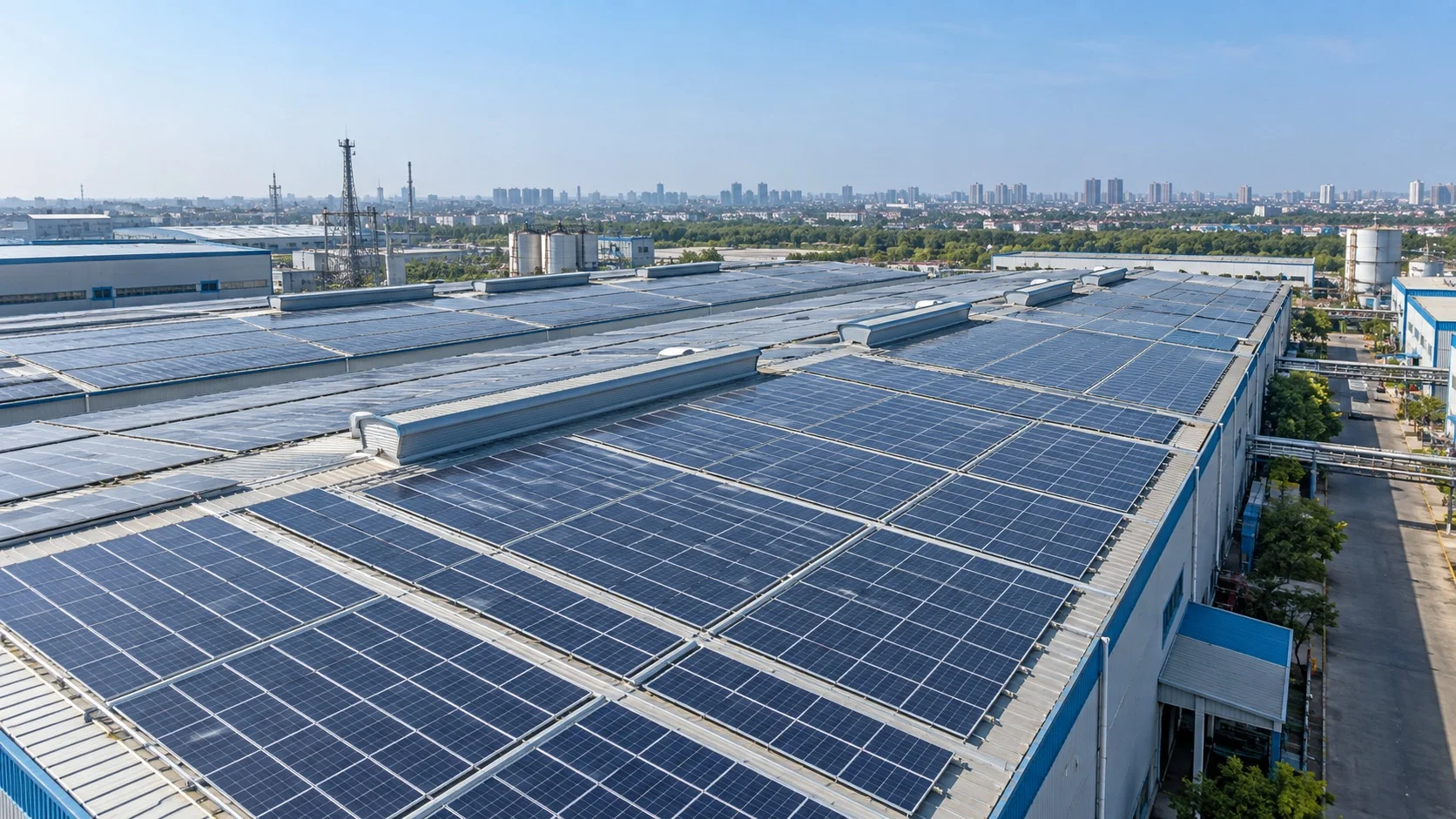
500+installations across SolarSky’s overall service region
Serving four districtsAgra, Mainpuri, Firozabad and Etah
Site-specific planningroof, land and operating needs considered together
Before choosing a capacity
Industrial solar planning needs more than a monthly bill. The assessment should account for when equipment runs, where panels can go and how installation fits around site activity.
Production hours
Production shifts, refrigeration or process loads, weekly closures and seasonal changes affect how much solar electricity your site can use. Planned machinery additions also belong in the assessment.
Roof and land
Usable roof or land, shading, roof condition and safe maintenance access all matter. Production routes, loading areas and other site activities need to remain part of the discussion.
Installation planning
Agree installation access, electrical-work windows, responsibilities and handover documents before work begins. These details help your team prepare for the project alongside day-to-day operations.
A factory running one daytime shift uses electricity differently from a unit working through the night. Weekly shutdowns and planned machinery additions also affect how much solar generation the site can use. These operating details help shape the design.
Refrigeration demand can continue after sunset and change with seasonal loading. Rooftop solar for a cold-storage building needs to be assessed against both daytime and overnight use. Equipment that must stay powered during an outage needs a separate backup arrangement; standard on-grid solar alone cannot provide it.
Two ways to use your space
The site survey helps establish which layout is suitable. Available area is only one part of the decision.
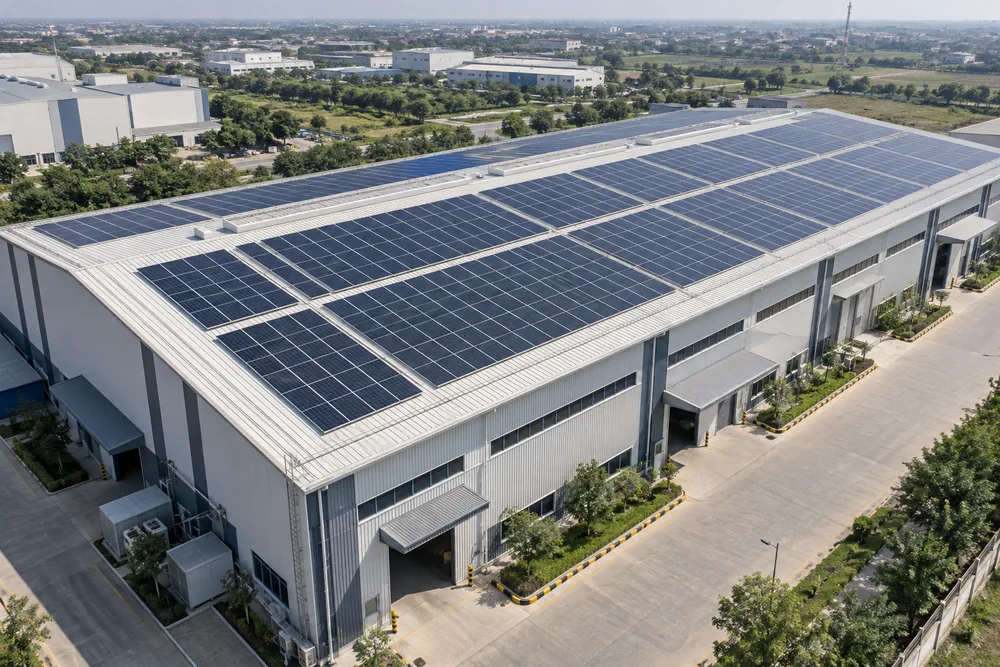 01 · Rooftop
Work with the building’s usable roof area, structural suitability and condition. Shading, other rooftop equipment and safe access for installation and maintenance affect the layout. Any planned roof repairs should be considered before panels are installed.
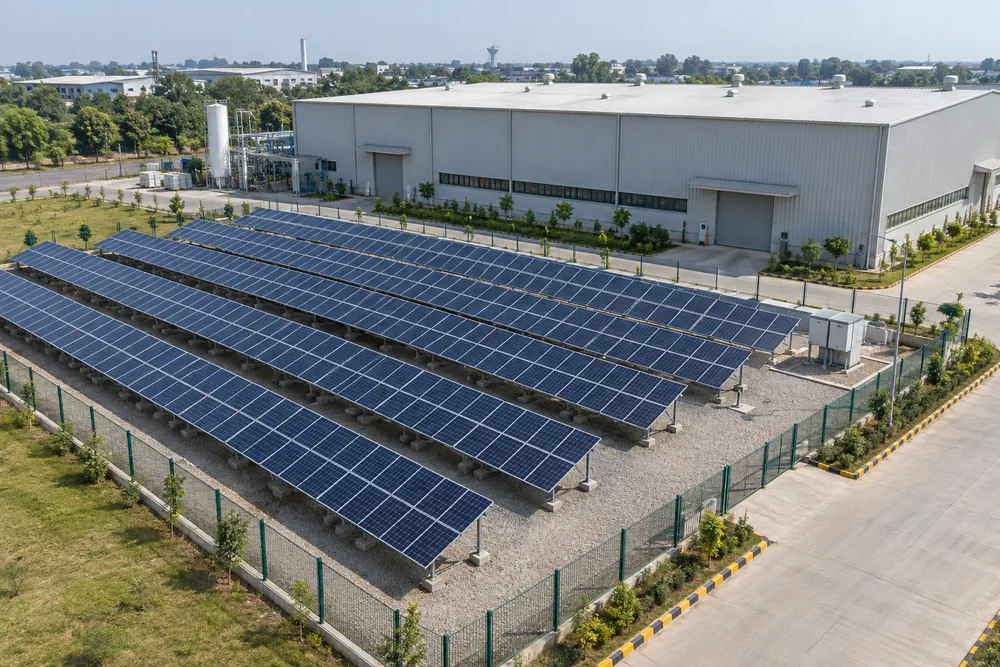 02 · Ground-mounted
Available land needs to be assessed for shading, ground conditions, access and the route to the electrical connection. Future construction and other site operations can affect where panels should go.
On-grid does not mean outage backup. A standard on-grid system does not keep machinery running when the grid fails. Existing generators, UPS systems and critical loads need a separate compatibility and backup discussion.
Solar generation and your electricity bill
When solar is generating and your equipment is running, the site can use that electricity instead of buying the same amount from the grid. If demand exceeds solar output, the grid supplies the difference. An on-grid industrial solar system still relies on the grid connection.
On quieter production days, generation may exceed site use. Whether that surplus can be exported, and how it is metered or credited, depends on the arrangement approved for your connection. It should not be treated as guaranteed income.
A useful savings estimate separates expected generation from electricity used on site and any permitted export. It also accounts for shifts, seasonal demand, tariff assumptions and maintenance costs. Check which fixed or demand charges remain: a lower electricity purchase does not necessarily remove every charge.
The quotation depends on the proposed capacity, equipment and work your site needs. Panel and inverter selection, mounting structures, electrical connections and installation access all affect the scope. Roof repairs or ground preparation can add work beyond the solar equipment itself.
Compare quotations on the same basis. A panel price alone does not show the cost of a complete industrial solar plant. Confirm whether civil work, approvals, metering, taxes and maintenance are included or separate.
SolarSky confirms pricing, installation timelines and workmanship warranty in your site-specific quotation.
Your first enquiry
From assessment to after-sales
Review site conditions and your operating requirements.
Discuss the configuration, scope and project terms.
Plan the agreed installation and documentation.
Discuss ongoing cleaning, maintenance and repair needs.
Your operations team needs the final equipment details, warranty documents and applicable commissioning or metering records. Confirm how to check generation, whether monitoring is included, and who receives fault alerts. Clear records make it easier to raise a service request later.
SolarSky offers AMC, preventive maintenance, cleaning and repairs. Agree the service scope and charges, access arrangements and a contact for faults. Maintenance visits need to fit the site’s safety and production restrictions; monitoring access does not by itself mean someone is watching the system continuously.
Solar panels generate electricity during daylight. Compare daytime consumption with night-shift needs before deciding on system size. A standard on-grid system does not supply solar power at night; storage or other supply arrangements need a separate assessment.
The assessment needs electricity-use records, operating patterns, usable space and connection details. Machinery loads, seasonal production and future changes matter. SolarSky discusses a site-specific recommendation rather than specifying capacity from roof area alone.
Look for the proposed capacity, equipment specifications, installation scope, exclusions, taxes, payment stages and warranty terms. Generation and savings assumptions should be written down so you can compare proposals on the same basis.
No. A standard on-grid solar system does not provide backup when the grid fails. Share your existing generator, UPS and critical-load requirements so compatibility and backup can be assessed separately.
Neither layout is automatically better. Roof condition, available land, shading, access and competing uses of the site determine which option is suitable.
Share shutdown windows, access restrictions and safety requirements before the proposal is agreed. Electrical work and site conditions may require planned interruptions. Confirm the schedule and responsibilities in writing; zero downtime is not promised.
Request a site-specific estimate explaining generation, usage, tariff, metering and maintenance assumptions. Actual results vary. Confirm any incentive eligibility separately before including it in your estimate.
SolarSky offers AMC, preventive maintenance, cleaning and repair services. Confirm what the installation includes, which services cost extra, and the warranty provider, scope, period and exclusions in the written proposal.
Start with a free site survey
Start with a free site survey. Share your site type, location and shift pattern. You can discuss bills, site drawings and equipment details with the team after the first enquiry. A survey request does not confirm a visit date; the team will coordinate availability with you.
Agra head office hours: Monday–Sunday, 10 AM–7 PM